Data security Payday Loans What a relief these loans bring
 
 
Sign up for our Email Newsletter
Email:  

Sponsor a Great Cat!


GoodSearch: You Search...We Give!

7 Things To Do This Winter for Stray Cats Print E-mail
Thursday, 01 January 2009 14:53

Minnesota winters can be brutal and dangerous to homeless companion cats. Want to help the feral and stray cats in your community this winter? Feline Rescue recommends the following simple steps:

Indoors

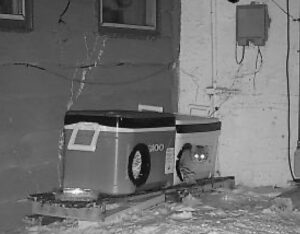
Build an Outdoor Shelter and Feeding Station

Shelters are easy and inexpensive to build. You can use the plans available via the web links on our site, or modify a pre-built dog house. Some manufacturers also sell pre-built cat shelters.


The shelter should be elevated off the ground and sited in a quiet, unobtrusive area with a minimal amount of traffic. A good-sized shelter offers a space just big enough for three to five cats to huddle. The door should be no more than six to eight inches wide to keep out wildlife and larger predators. Install a flap on the door to keep out snow and wind.

Insulate the shelter against moisture as well as cold! Straw resists the wet and keeps a shelter warm, and is the best choice for insulation and bedding. Blankets are not a good idea, as they absorb moisture like a sponge.

In addition to a shelter, you can build a simple feeding station with a roof and sides to protect cats from the elements while they eat.

 1: Keep them indoors! 

Keep Food and Drinking Water from Freezing

Wet food in insulated containers is most ideal for winter time feeding, as it takes less energy for cats to digest than dry food – and cats can use all that extra energy to keep warm.


Preventing liquids from freezing can be a challenge during the winter and can lead to a risk for dehydration. Keep water drinkable by using bowls that are deep rather than wide, and place them in a sunny spot. If possible, refill the bowls with hot or warm water. A pinch of sugar in the water also keeps it from freezing as quickly, and provides an added boost of
energy for the cats. An alternative are the heated electric bowls found in many pet shops.


Try to keep to a regular feeding schedule every day. The cats will come to expect you, and the food and water will spend less time in the cold before it is consumed. Feed your cats in the morning and during the day, if you are home. Feeding at night will encourage other wildlife (and feral cats are a type of wildlife) to visit your yard and eat the food instead of the cats. If you feed other nocturnal wildlife, feed them in a different area of your yard at night.

 1: Keep them indoors!

Provide a Winter Proof Litter Area

You can provide a covered litter box in a protected area of your yard, or just dump a pile of sand or of peat moss in an out-of-the-way area of your yard for the cats to use instead. If you have evergreen trees around, the cats will use piles of pine needles or other leaves, if it is in a protected spot. Cat urine is high in nitrogen and will give you the greenest lawn in the neighborhood. If you have a pile of soft material for your feral cats to use as a litter pan area, they will not dig in harder ground in other areas.

Feral cats bury their excretion by instinct. If you find excretion above ground, it is from other wildlife or wandering dogs, not feral cats.

 1: Keep them indoors!

Get Educated about cats, and help stop the breeding cycle with TNR

Make sure to educate yourself, your family, and your neighbors about the habits of outdoor cats during the winter time. For example, check under the car before starting the engine, as cats will sometimes crawl into car engines or hide under them for warmth.


Prevent another “kitten season” next year by getting the outdoor cats in your neighborhood neutered now. While spring is the time of year when most litters are born, cats have a 63-day gestation period and usually mate in winter. End the cycle of breeding and help the cats lead better lives by humanely trapping them and having them neutered by a veterinarian.

In collaboration with other Twin Cities rescue groups, Feline Rescue performs Trap-Neuter-Return (TNR) services and may be able to help. Where resources are available, Feline Rescue's Outreach Program assists with providing spay/neuter services and veterinary care to stray and feral cats. Contact This e-mail address is being protected from spambots. You need JavaScript enabled to view it for more information.

 1: Keep them indoors!

Take In a Stray Cat in for the Winter

If you see a new cat outdoors, you may think he's lost.  But with many feral cats living as wildlife, and many pet cats allowed outside (without collars), proceed cautiously.  Rescuing may not be necessary or even the best decision.  Unless the cat is in danger, observe him for a few days to ensure he really needs help.  First you want to determine if this is a pet that goes out, a feral cat, or a stray cat:

Outdoor Pet Cat Characteristics.  Friendly, well-groomed cats are probably pets that go outdoors.  They're comfortable with people and may try to come inside.  Females and neutered males are usually neighborhood cats -- they seldom roam -- but intact male cats do -- so they may live far away.

Feral and Stray Cat Characteristics.  It's hard to tell a feral cat from a lost cat because pets revert to feral behaviors when they're lost and scared.  Both come out at night and hide during the day.  When approached, they can both show signs of aggression (hiss, growl, bared teeth, arched back) and will run if you make eye contact.  The differences are subtle.

Feral cats spend their whole lives outdoors, and can be found all over the country, from the largest cities to the most rural landscapes. They are not socialized to humans and don't easily adapt to human homes. Feral cats live amongst their own in family groups called “colonies,” and studies show they are just as healthy as pet cats. A feral cat may be better groomed, than a recently-lost pet who hasn't adjusted to living outdoors.  If you start feeding them, eventually both will trust you -- but the pet will begin acting like a companion while the feral cat will stay skittish -- especially around others.

If you believe that your new feline visitor is a stray or feral, by all means, please provide them a safe and warm place to stay for the winter! A warm garage, barn, or shed, with safe places to curl up makes an ideal haven for strays and ferals.

It is always best to keep any stray, feral, or unidentified cat away from your other household pets until a complete veterinary exam can be completed.  Where resources are available, Feline Rescue's Outreach Program assists with providing spay/neuter services and veterinary care to stray and feral cats. Contact This e-mail address is being protected from spambots. You need JavaScript enabled to view it for more information.
 1: Keep them indoors!

Become a Foster Caregiver

Though Feline Rescue, Inc. has a shelter, there is always a need for foster homes for pregnant cats, abandoned kittens, special needs cats (including those with Feline Leukemia) and those recovering from injuries or surgery. Foster care allows the cats/kittens to become acclimated in a loving home environment where they are nurtured and cared for until ready for adoption.

Our foster care coordinator  ( This e-mail address is being protected from spambots. You need JavaScript enabled to view it This e-mail address is being protected from spambots. You need JavaScript enabled to view it ) can further explain the program and be a resource to you throughout your fostering. After completing an application and if approved, a contract is signed agreeing to terms for fostering. To download a Foster Caregiver application form and waiver, please click here.

 1: Keep them indoors!

Donate to an animal rescue organization

As a volunteer-based, non-profit organization that receives no government funding, Feline Rescue relies entirely on the support of friends in the community to sustain its operations and programs, and rescue cats from difficult and dangerous situations.  We rely heavily on the kindness and generosity of animal lovers near and far to help us do our work. We encourage you to donate to Feline Rescue to help us in our mission to provide safe shelter, vertrinary care and socialization for stray, abandoned, or abused cats until good permanent homes can be found for them.

Adapted from info published by our friends at Alley Cat Allies


Feline Rescue, Inc

593 Fairview Ave N, St. Paul, MN, 55104

651-642-5900 | info@felinerescue.org

www.felinerescue.org

Feline Rescue, Inc. is organized exclusively for charitable and educational purposes. Our primary goal is to provide shelter and care for stray, abused and abandoned cats until they are adopted into suitable homes. Feline Rescue has no paid staff.

Info: About Feline RescueBlog | Contact | Disclaimer | Donate Now | Privacy

Links: Amazon Wish List | FacebookFacebook Cause | TwitterYouTube |

Site Tools: Site Map | News | rss Subscribe to Feeds

epoksi

ingilizce kursu

otomatik kapi

cilt bakimi